Chief Officer Salaries in 2026: How Much Do Merchant Navy Chief Officers Earn?
Super Admin
Jun 18, 2026
100 views
The Chief Officer, also known as the First Mate, is the second-in-command onboard a merchant vessel and plays a critical role in cargo operations, deck maintenance, navigation, and crew management. As the direct successor to the Master, the position carries significant responsibility—and is reflected in the salary.
Chief Officer earnings vary depending on vessel type, company, experience, trade routes, and nationality. Specialized vessels handling hazardous cargo or offshore operations generally offer the highest salaries.
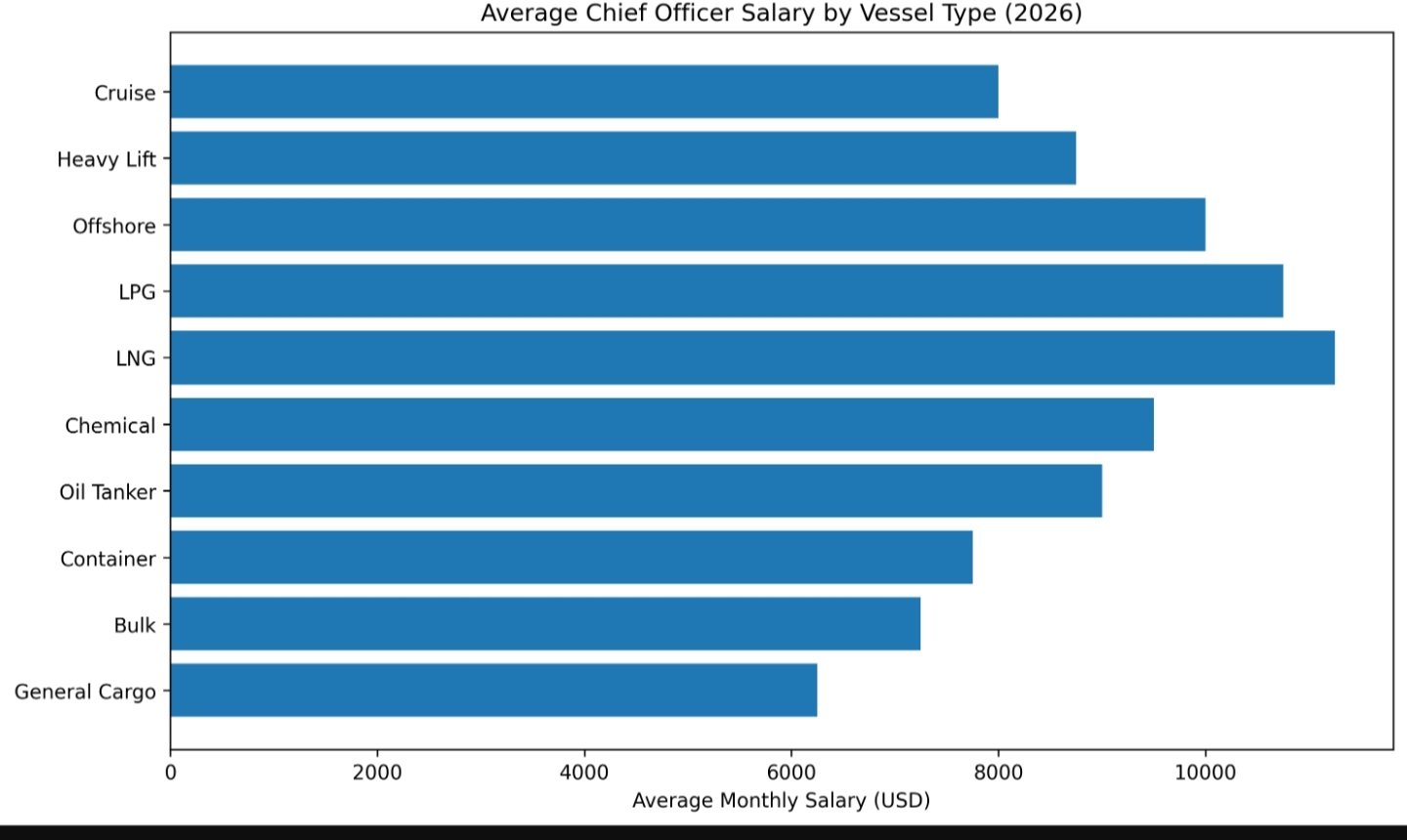
Average Monthly Chief Officer Salaries (2026)
Vessel Type Monthly Salary (USD)
General Cargo Ship $5,500 – $7,000
Bulk Carrier $6,000 – $8,500
Container Ship $6,500 – $9,000
Oil Tanker $7,500 – $10,500
Chemical Tanker $8,000 – $11,000
LNG Carrier $9,500 – $13,000
LPG Carrier $9,000 – $12,500
Offshore Support Vessel $8,000 – $12,000
Heavy Lift / Project Cargo $7,500 – $10,000
Cruise Ship $6,500 – $9,500
What Influences a Chief Officer's Salary?
Several factors determine how much a Chief Officer earns:
Vessel Type: LNG and chemical tankers typically pay the highest salaries due to specialized cargo operations.
Experience: Senior Chief Officers with multiple contracts often command higher wages.
Company Reputation: International operators generally offer better salary packages and benefits.
Trading Area: High-risk regions may include additional bonuses or risk allowances.
Contract Length: Shorter contracts sometimes come with higher monthly pay.
Career Progression
For many deck officers, becoming a Chief Officer is the final step before promotion to Master. In addition to higher earnings, the role provides valuable command experience, leadership responsibilities, and advanced cargo management skills.
Salary Comparison
Rank Average Monthly Salary (USD)
Second Officer $3,500 – $5,500
Chief Officer $6,000 – $13,000
Master (Captain) $9,000 – $16,000+
Shiptionary Exclusive
Although salaries remain an important attraction, today's Chief Officers face increasing responsibilities beyond navigation and cargo. Environmental compliance, cyber security, digital reporting, crew welfare, and advanced safety management have expanded the role considerably over the past decade.
As shipping embraces smarter technologies and stricter environmental regulations, the Chief Officer is no longer just the Master's deputy—they are becoming one of the industry's most versatile maritime professionals.
Shiptionary Insight
"The bridge to becoming a Captain begins with mastering the responsibilities of a Chief Officer."